
Training
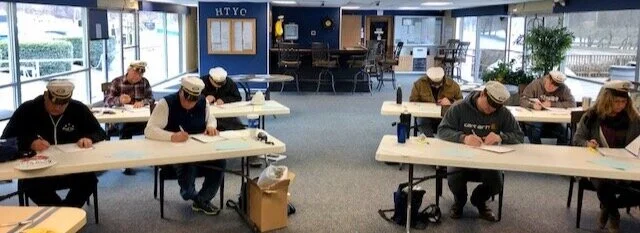
Studying for your captain's license? Storch Marine offers one-on-one tutoring for the USCG OUPV and Master examinations —
Rules of the Road, chart plotting, navigation, and deck general —in person or by video. Your tutor is Captain Andy Storch, a USCG
100-ton Master and retired Navy Commander who taught these courses for years. $60/hour. (513) 978-7290
Did you just purchase a new boat? Need help learning how to operate it? Or do you just want to learn how to pilot a boat?
We provide hands-on training using our boats and yours. We cover everything from safety laws, pre-underway checks, weather, and currents to boat handling, piloting, line handling, and emergency situations.
Captain Storch has been a certified instructor for Freedom Boat Club in Cincinnati, Ohio. He has also instructed the USCG OUPV, Masters, Towing, and Sailing courses through TrueCourse Captain's School.
You can learn the right way, or you can learn the hard way. The right way is always much less expensive. All too often, the hard way is not only expensive — it's dangerous.
training course by Captain Storch may include:
Safety Topics
PFD: Personal Flotation Device requirements
COMMUNICATION: Communication equipment requirements
EMERGENCY SIGNALS: Radio, flag, flare, lights cell phones
FIRE EXTINGUISHERS: Requirements, types
OTHER EQUIPMENT: Pumps, buckets, whistle, bell, anchor, etc
RULES OF THE ROAD: Right of Way, Aids to Navigation, Running Lights
Basic Maintenance Topics
ROUTINE FLUID CHECKS: Engine/Generator oil, transmission, coolant, abnormal conditions, changing fluids
WATER INTAKES: Purpose, maintenance/cleaning, opening/closing, impellers, abnormal conditions
BILGE: Checks/inspections, location of bilges, abnormal conditions
WATER/SEWAGE SYSTEM: Pump out stations, overboard discharge, legal/laws
OTHER SYSTEMS: Air conditioning, ventilation, steering, propulsion, Zinc
WINTERIZATION:Engines, Water System (including hot water heater), toilets, A/C, Generator
Basic Boat Handling Topics
MOORING LINES: Mooring (tying up the boat), getting underway, types of line
ELECTRIC POWER: connecting, disconnecting, AC and DC power systems, batteries, generator
STARTING ENGINES: engine room blower, engine gages, fuel, fuel tanks
MANEUVERABILITY: single/double engine control, prop/rudder forces, current, wind, “less is more”
ANCHORING: types of anchors, anchor chain/line, scope of chain, anchoring/un-anchoring, lights
ABNORMAL CONDITIONS: foul weather, running aground, loss of steering, loss of engines